The IFIA-ABIPIR Latin American Office, in collaboration with the IFIA Startup Department, organized a specialized training program on securing non-refundable funding, attracting strong participation from startups, inventors, and researchers in Brazil.
IFIA-ABIPIR organized a grant funding training for innovators in Brazil to support startups and researchers.
The event brought together Startup Inventors, Entrepreneurs, and Academic Researchers eager to seek knowledge because, however innovative an invention or project may be, they do not achieve success without financial resources.
Aligned with the guidelines of IFIA, led by President Alireza Rastegar, ABIPIR has been contributing to the success of thousands of Inventors, Scientists, and Entrepreneurs over its 15 years.
The Startup Day – Sebrae held in Vilhena – Rondônia, Brazil, an event that takes place simultaneously in several cities throughout Brazil, addressed the theme of the journey of raising funds – what really increases your chances of approval.
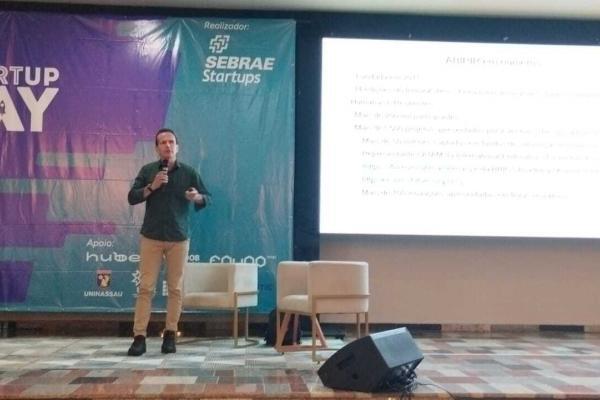
The Director of the Latin American Office of IFIA-ABIPIR, Marcelo Vivacqua, was the speaker at the Startup Day organized by Sebrae – the Brazilian Service for Support to Micro and Small Businesses in Vilhena, a municipality with a thriving economy, talented entrepreneurs, and a population that offers a warm welcome to both Rondônia residents and visitors. The experience reinforced something essential: raising funds for innovation goes far beyond technique; it requires mindset, strategy, and discipline.

ABIPIR will be celebrating 15 years of activities focused on the personal and professional development of Inventors, Scientists, and Entrepreneurs by providing free space for them to present their innovations at InnovaCities – International Fair of Smart, Cheerful, Humane, and Resilient Cities, through training such as the one that took place in Vilhena, international representation of Startups, companies, and Science, Technology, and Innovation institutions, among others.
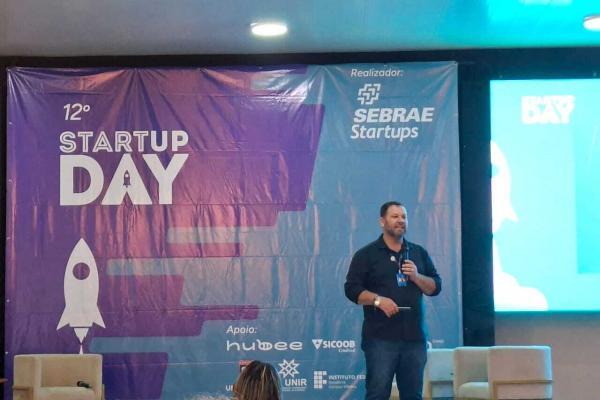
Emerson Pinduca, business analyst and innovation interlocutor at Sebrae in Vilhena, brings in his speech the perspective that there is no lack of money, but rather a search for guidance on the part of entrepreneurial society. He also added that the participation of President Vivacqua guided, framed, and expanded the possibilities for the startups present to leverage their solutions more quickly. His presence in Vilhena was invaluable.
Vilhena was on the map of action for Startup DAY 2026 and could count on the valuable contribution of the President of ABIPIR, Marcelo Vivacqua, who was able to demonstrate to the entrepreneurs present the world of possibilities for putting their ideas into action through the calls for proposals.
The raising of non-refundable funds begins long before submission and ends long after approval. This was one of the central messages of the lecture: successful projects are not born from one-off opportunities, but from a structured mindset of continuous preparation. Thinking like a fundraiser means developing projects even before the calls for proposals open, organizing evidence, structuring methodologies, and aligning the proposal with public policies. Those who wait for the call for proposals to open are scrambling, those who are prepared have a head start.
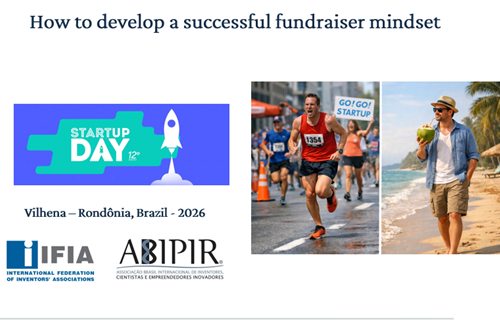
One of the most provocative points was the deconstruction of myths that still discourage good projects. It is not true that only large companies are approved, nor that the process is political or unfeasible. The evaluation is technical, based on objective criteria and adherence to the call for proposals. Another recurring myth is believing that the project needs to be perfect: in practice, what is sought is maturity appropriate to the level of technological development and clarity in execution. Rejection does not mean failure, but rather valuable strategic feedback for the evolution of the proposal.
From the evaluator’s point of view, many projects are eliminated even before the technical analysis due to simple qualification flaws. Incomplete documentation, inconsistency with social purposes, or absence of mandatory requirements are fatal errors. Here is a direct piece of advice: technical excellence does not compensate for compliance failures. Qualification is binary; it either complies or it does not. Therefore, structuring internal processes to ensure compliance is as important as developing innovation.
In the merit stage, some factors make all the difference. Clarity in defining the problem and the solution, methodological coherence, a qualified team, and a well-defined market potential are decisive. But there is a critical point that many neglect: economic subsidies finance technological risk, not market risk. Projects need to demonstrate real technical uncertainty, a mitigation plan, and a clear evolution of the level of technological maturity. Balance is key: too little risk seems like mere business execution, excessive risk without strategy seems unfeasible.
Finally, the most strategic recommendation: align your project with the call for proposals as if it had been designed specifically for that call. Use the language of the call, explicitly state your objectives, and demonstrate complete adherence. In addition, invest in the narrative, as evaluators are human and decisions depend on their performance.