Creativity and Innovation Day 2026 Demonstrates the Growing Strength of Youth Innovation in Africa
A Landmark Celebration of Scientific Creativity in Kinshasa
The second edition of Creativity and Innovation Day 2026, organized by IFIA member Lebanese School in Kinshasa “Arab Cultural Association” at the Lycée Libanais de Kinshasa in the Democratic Republic of the Congo, concluded with remarkable success, showcasing the creativity, technical skills, and innovative potential of young African innovators.
Held from 22 to 25 May 2026 under the theme “A Generation That Shapes Its Future,” the event brought together students, educators, government officials, diplomats, researchers, and media representatives in a large-scale celebration of innovation and scientific achievement. The event was organized within the framework of the International Federation of Inventors’ Associations (IFIA) and further strengthened the school’s position as a regional center for innovation education
Seven Months of Intensive Innovation Development
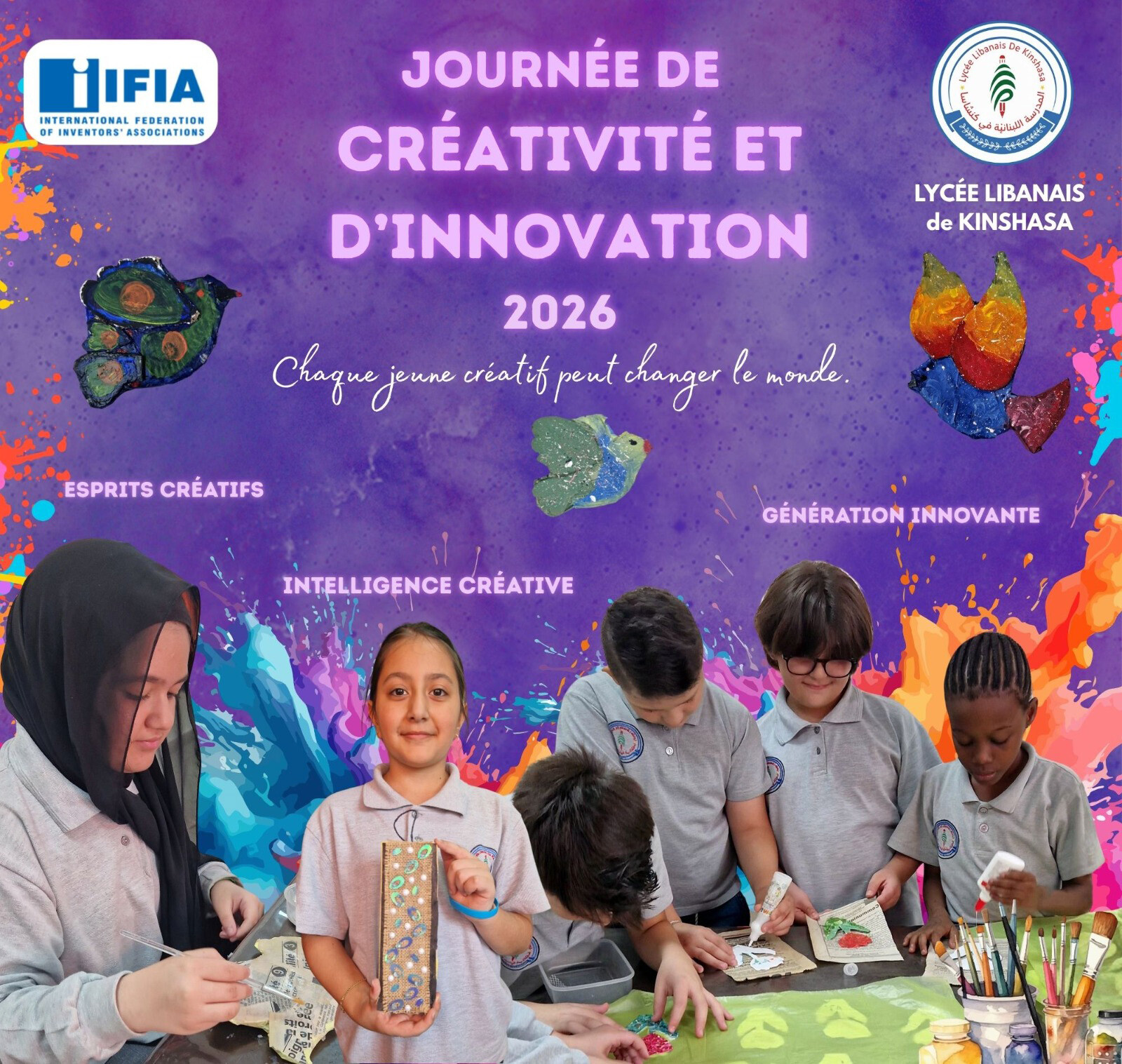
The event represented the culmination of an extensive seven-month innovation program that began at the start of the academic year in October 2025. Throughout this period, students worked beyond regular classroom schedules in laboratories and technical workshops, developing prototypes, conducting experiments, and refining their projects.
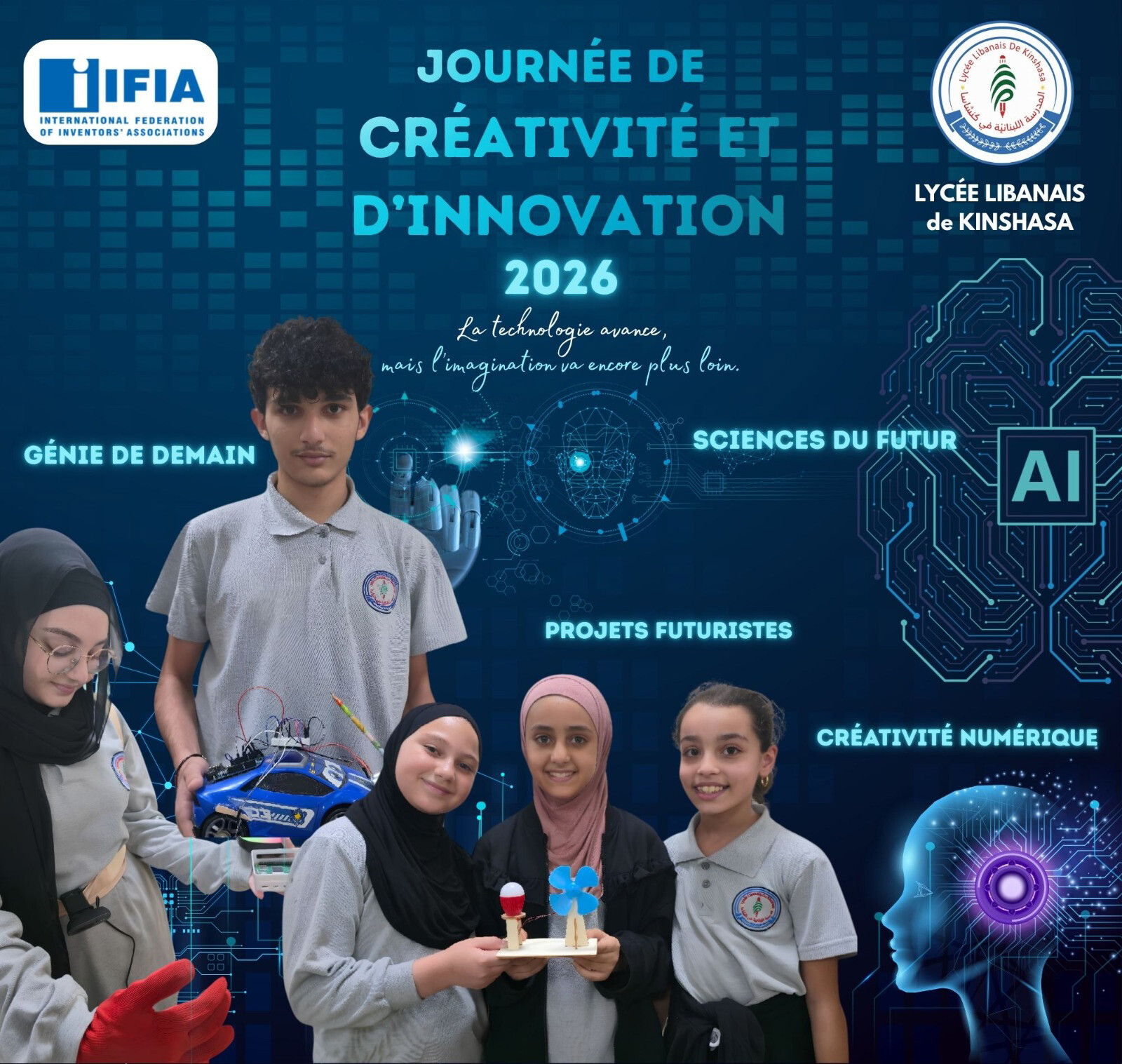
Participants engaged in programming using Arduino, Python, C++, and ESP32 platforms, while others focused on artificial intelligence, robotics, green chemistry, biochemical testing, and engineering design. This long-term educational approach enabled students to transform scientific concepts into practical and market-oriented innovations.
Strong Institutional and Diplomatic Participation
The event attracted significant national attention and welcomed senior representatives from government, education, research, and diplomatic institutions.
Among the distinguished attendees were ministers responsible for national education, higher education, scientific research, innovation, and youth affairs, together with the Governor of Kinshasa, senior educational officials, and representatives of the Lebanese diplomatic and community organizations. Extensive media coverage further amplified the impact of the event, including live broadcasts and a dedicated educational documentary.
Seventy-Five Projects Evaluated by University Experts
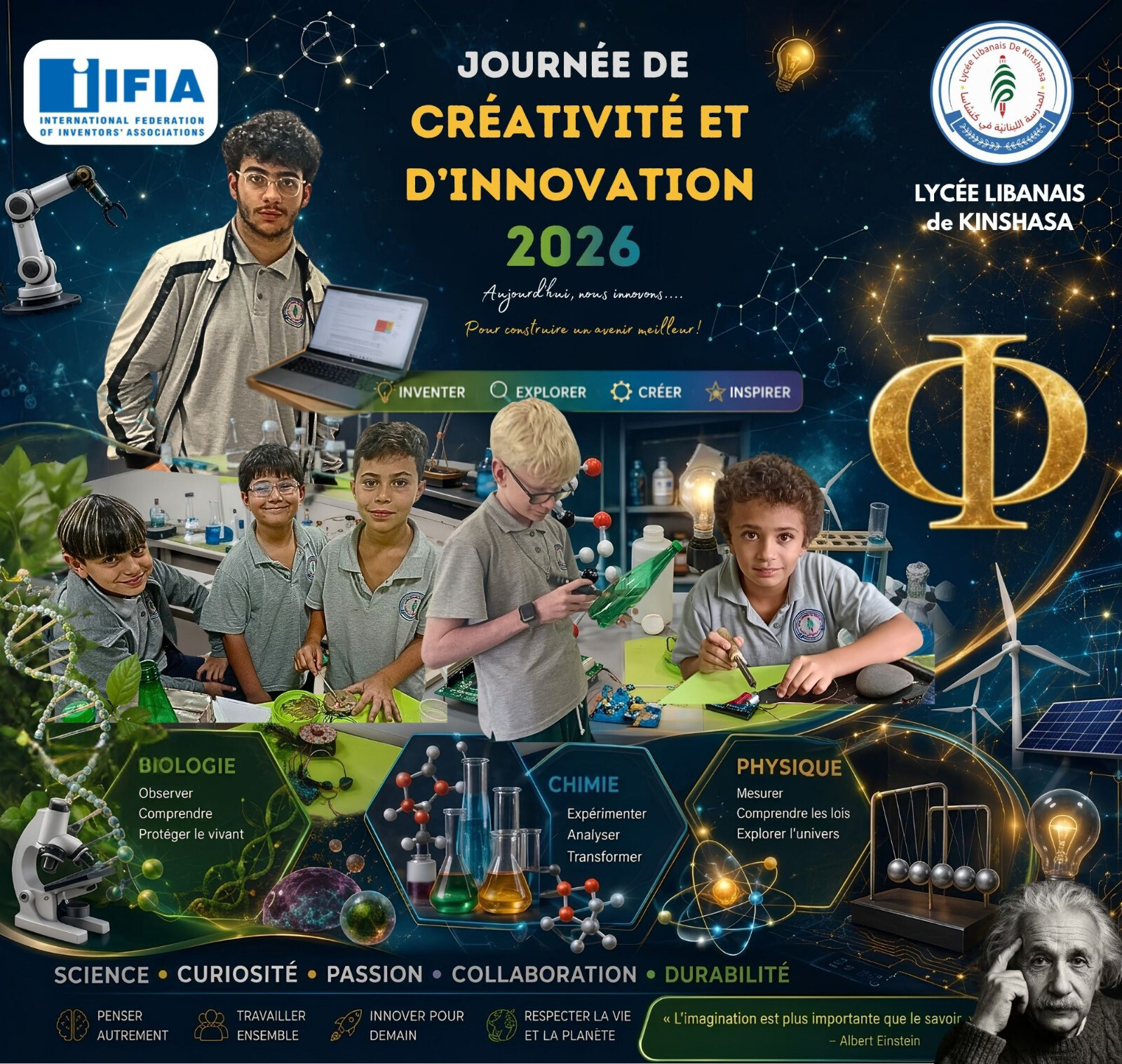
A total of 75 student innovation projects were evaluated by an independent academic jury composed of professors and researchers from the Université Pédagogique Nationale (UPN).
Projects were assessed according to innovation, technical quality, scalability, and societal impact across four major sectors:
- Artificial Intelligence, Internet of Things, and Robotics
- Public Health and Biomedical Engineering
- Green Chemistry and Environmental Sustainability
- Applied Physics and Creative Design
The diversity and quality of the projects reflected the growing maturity of STEM education and innovation training among participating students.
IFIA Awards Recognize Outstanding Innovations
Among the most prestigious distinctions presented during the event were two IFIA Awards for Excellence.The BlindVision AI project received recognition for its application of computer vision and artificial intelligence to promote social inclusion, while the Smart Speechless AI Helper project was honored for its innovative use of machine learning and motion-signal synthesis to assist individuals facing communication challenges.
Additional awards were presented to projects addressing environmental sustainability, smart infrastructure, healthcare technologies, engineering solutions, and circular economy innovations. Notable winning projects included L’Eco-Cycle Plate, a biodegradable tableware solution produced from banana and coconut fibers, and AquaScan Intelligent Station, an intelligent water-quality monitoring system.
Building the Future of Innovation in Africa
The success of the 2026 edition has encouraged organizers to pursue a broader international vision for the future of Creativity and Innovation Day. Building on the remarkable achievements of this year’s participants, plans are already underway to expand the event beyond its current national scope and establish it as a leading international platform for youth innovation in Africa.
Future editions are expected to welcome schools, innovation clubs, and young inventors from across the African continent and other regions of the world. Organizers also aim to strengthen the event’s international profile by inviting official IFIA jurors, academic experts, industry leaders, and innovation stakeholders to participate in the evaluation and mentorship process.
In addition to increasing exhibition capacity and the number of participating projects, long-term development plans include the creation of a dedicated intellectual property and patent-support structure.
This initiative will help outstanding student innovators better understand the importance of protecting their inventions and provide guidance on transforming promising ideas into future entrepreneurial and commercial opportunities.
The organizers also envision stronger collaboration with universities, research institutions, technology companies, and innovation-support organizations in order to create a sustainable innovation ecosystem that extends beyond the annual exhibition itself.
These initiatives aim to transform Creativity and Innovation Day into a major international platform for youth innovation while positioning Kinshasa as a regional hub for scientific creativity, technological entrepreneurship, and innovation-driven education.
Conclusion
Creativity and Innovation Day 2026 demonstrated how sustained investment in STEM education, research, and innovation can empower young people to develop practical solutions to real-world challenges. Through seven months of dedicated work, 75 projects, and the recognition of outstanding achievements through IFIA Awards, the event highlighted the immense potential of Africa’s next generation of inventors and innovators.
Beyond the impressive number of projects and awards presented, the event showcased the value of combining education, creativity, and scientific inquiry to cultivate future problem-solvers and innovators. It provided students with a unique opportunity to experience the complete innovation journey from identifying challenges and conducting research to developing prototypes and presenting solutions before an independent jury.
As Creativity and Innovation Day continues to grow, it has the potential to become one of Africa’s most influential youth innovation platforms, inspiring young people to pursue science, technology, engineering, and entrepreneurship while contributing to the social and economic development of their communities. With the continued support of IFIA and its partners, the initiative is laying the foundation for a new generation of innovators capable of shaping a more sustainable, prosperous, and technology-driven future for Africa and beyond.